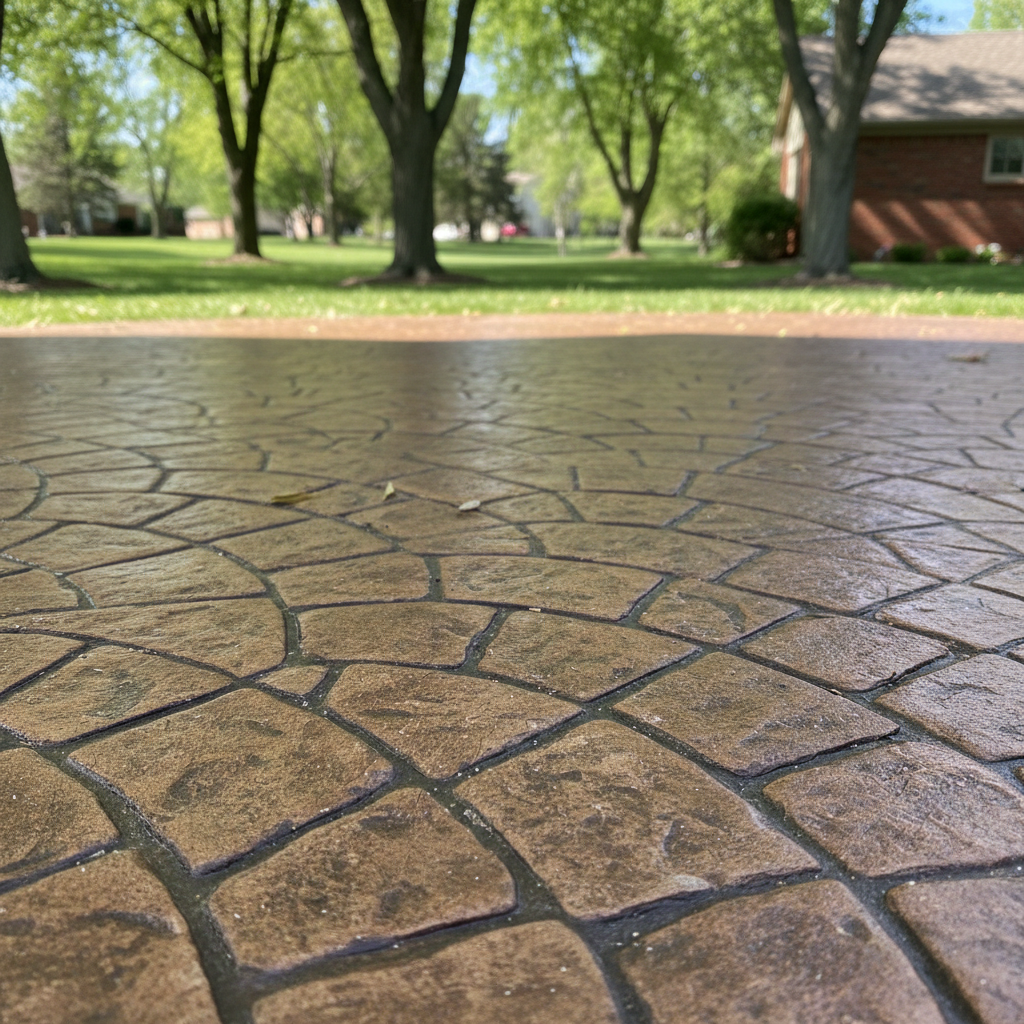
Thinking about stamped concrete, maybe for a patio, walkway, or even a driveway? It's a great choice, no doubt about it. But I know you've got questions, probably a whole bunch of them. Folks in Naperville are smart; they want to know what they're getting into. So, I've put together answers to the toughest, most common questions I hear about stamped concrete. Let's dive right in.
How long does stamped concrete really last, especially with our Naperville winters?
This is always one of the first things people ask, and it's a fair question, especially with the freeze-thaw cycles we get here in Naperville. A properly installed stamped concrete surface, sealed correctly, can easily last 20 to 30 years—sometimes even longer. The key, though, is "properly installed" and "sealed correctly." That means good sub-base prep, the right mix design, and a professional application. If it's done right, those harsh winters won't be an issue. We make sure to use high-quality sealers. These are designed to protect against moisture penetration and de-icing salts, which are the real enemies of concrete in cold climates. Think of it like a good winter coat for your concrete; it keeps the elements out.
Is stamped concrete slippery when it's wet or icy?
Another excellent question, and it's a common concern, especially for areas like pool decks or walkways. The short answer? It doesn't have to be. When we apply the sealer, we can add a non-slip additive to it. This is usually a fine grit, sometimes called shark grip or similar, that gets mixed into the final coat of sealer. You won't really see it, but you'll definitely feel the difference underfoot. It provides a little extra texture, making the surface much safer, even when it's wet or covered in a light dusting of snow. We always recommend this for any outdoor stamped concrete project, particularly if it's near water or a high-traffic area. Safety first, always.
What kind of maintenance does stamped concrete need? Is it a lot of work?
Compared to something like a wood deck that needs staining every couple of years, stamped concrete is pretty low maintenance. The main things you need to do are keep it clean and re-seal it periodically. For cleaning, a simple sweep and a good wash with a hose or a mild detergent and brush will usually do the trick. For tougher stains, a pressure washer on a low setting can work, but be careful not to get too aggressive. The re-sealing part is crucial. I usually tell folks to plan on re-sealing every 2-3 years, depending on traffic and sun exposure. It protects the color and keeps the surface looking fresh. It's not a huge job; you can DIY it if you're handy, or we can certainly do it for you. It's an investment in keeping your outdoor space looking great for decades.
Can stamped concrete crack? And if it does, what then?
Look, concrete is concrete, and concrete can crack. It's just a fact of life. We do everything in our power to minimize cracking, though. That includes proper sub-base compaction, using the right concrete mix, and installing control joints (those lines you see cut into concrete). These joints aren't just for looks; they're designed to give the concrete a place to crack predictably, usually along those lines, rather than randomly across your beautiful pattern. If a crack does appear outside a control joint, it's usually a hairline crack and often isn't structural. For minor cracks, there are repair options like crack fillers or color-matched sealants that can make them almost invisible. For more significant issues, we'd assess it and recommend the best course of action. But honestly, with proper installation, serious cracking is rare.
How much does stamped concrete cost compared to pavers or natural stone?
This is where stamped concrete often shines. Generally speaking, stamped concrete is going to be more affordable than natural stone or high-end pavers. You're getting the look of those more expensive materials without the hefty price tag. The exact cost depends on the complexity of the pattern, the number of colors, the size of the area, and site preparation. For example, a simple one-color stamp on a flat patio will cost less than a multi-color, intricate pattern on a sloped walkway. But as a rule of thumb, you're usually looking at significant savings compared to laying individual stones or pavers, and you get a monolithic surface, which means no weeds growing up between joints. Pretty neat, right?
Can you really match any look I want with stamped concrete?
Pretty much! The versatility of stamped concrete is one of its biggest selling points. We've got a huge selection of patterns and textures that mimic everything from natural flagstone, brick, and slate to wood planks. We can even do custom designs. Then there's the color. We can use integral colors mixed into the concrete itself, or surface-applied colors, or a combination of both, along with release agents that add secondary hues and depth. This means we can get incredibly close to matching existing brick on your Naperville home, or complement the stone on your fireplace, or create a completely unique look. The possibilities are pretty vast; just bring us your ideas, and we'll show you what we can do.
What about drainage? Will stamped concrete cause water to pool?
Absolutely not, if it's installed correctly. Proper drainage is something we prioritize from the very beginning of any project. We always ensure there's an adequate slope, or "pitch," built into the concrete surface to direct water away from your home's foundation, landscaping, and any low-lying areas. This is critical, especially around homes in areas like the Historic District or older parts of Naperville where original grading might be less than ideal. We'll assess your property's existing drainage and design the stamped concrete to complement or improve it. You won't have standing water or pooling issues when Coastal Concrete Solutions does the job.
Can I drive on stamped concrete? Is it strong enough for a driveway?
Yes, you absolutely can drive on it! Stamped concrete is just as strong and durable as regular concrete, assuming the same mix design and thickness are used. For driveways, we always pour a thicker slab, typically 4-6 inches, and ensure proper reinforcement with rebar or wire mesh. The stamping process itself doesn't weaken the concrete. In fact, a well-maintained stamped concrete driveway, sealed regularly, can withstand the weight of vehicles and the wear and tear of daily use just as well as a traditional concrete driveway. It's a fantastic way to add curb appeal and functionality without sacrificing strength.