When you're building a new home or adding on here in Naperville, one of the biggest choices you'll make, and often one people don't think much about until it's too late, is your foundation type. We're talking about the very base of your house, what holds everything up. For most residential projects around here, it usually comes down to two main options: poured concrete foundations or concrete block foundations. Both have their place, but they're not created equal, especially with our Illinois weather.
Poured Concrete Foundations: The Solid Choice
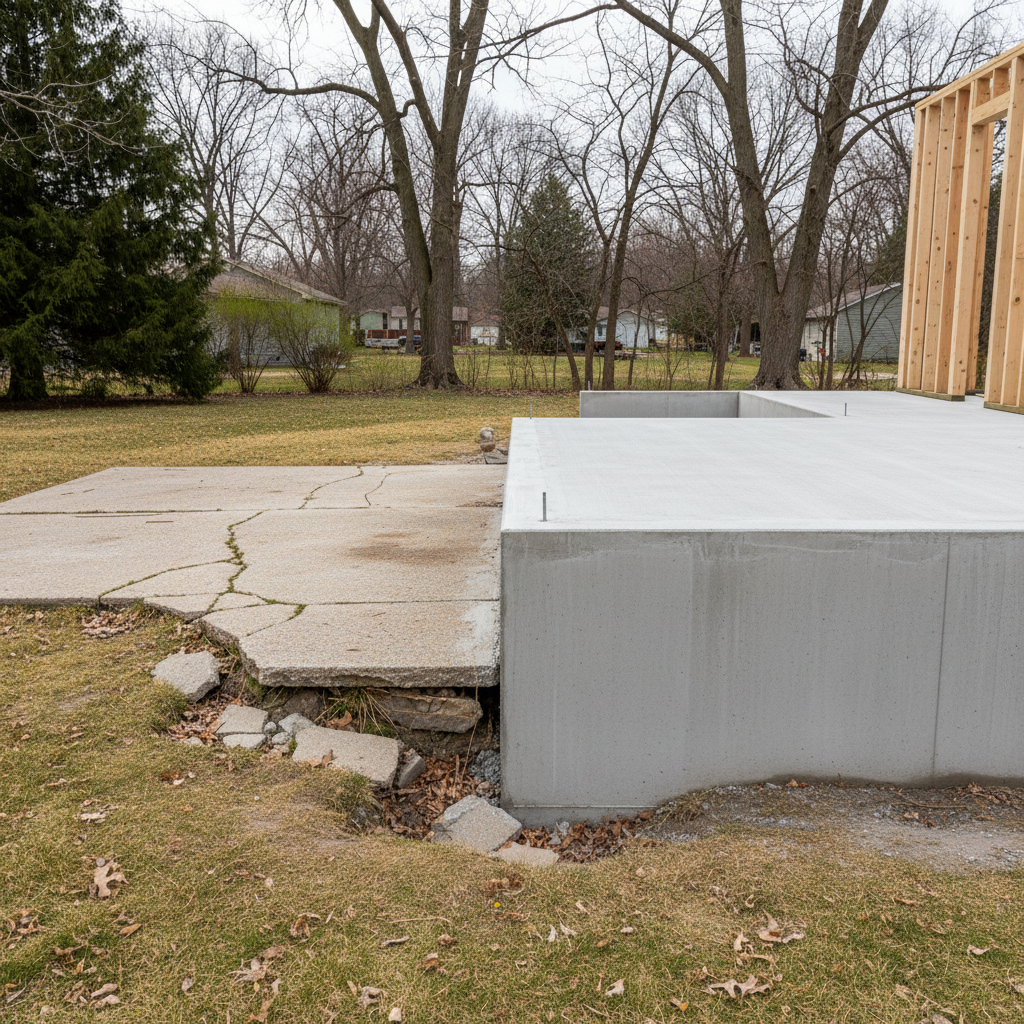
Let's start with poured concrete. This is exactly what it sounds like: we dig the trench, set up forms, and then pour ready-mix concrete directly into those forms. Once it cures, you've got a single, monolithic wall. Think of it like a giant, seamless bathtub holding up your house.
Durability and Strength
From a strength perspective, poured concrete is generally superior. Because it's one continuous piece, there are no joints or seams for water to penetrate or for structural weaknesses to develop. It's incredibly strong under compression, which is exactly what a foundation needs to be. This continuous nature also makes it highly resistant to lateral pressure from the soil outside, which is a big deal in places like Naperville where we get significant freeze-thaw cycles. That expanding and contracting soil can put a lot of stress on foundation walls, and a solid poured wall handles it better.
Water Resistance
This is where poured concrete really shines, especially in our area. Naperville, like much of Chicagoland, has its fair share of clay soil. Clay holds water, and when that water sits against your foundation, it's looking for a way in. With a poured wall, you have far fewer potential entry points for water compared to a block wall. We can apply waterproofing membranes directly to the smooth, continuous surface, creating a very effective barrier. It's not foolproof, nothing is, but it's a much better starting point for keeping your basement dry.
Cost
Historically, poured foundations could be a bit more expensive upfront due to the cost of forms and the specialized equipment needed for pouring. However, with advancements in concrete technology and efficient construction practices, the cost difference isn't as significant as it once was. Sometimes, depending on the project size and access, it can even be comparable or cheaper than block when you factor in labor efficiency. It's always worth getting a detailed quote for both options.
Appearance
Once the forms are removed, you're left with a smooth, uniform surface. This makes it easier to finish if you're planning to have an exposed foundation or want to apply stucco or other finishes directly to it. It's a clean look.
Concrete Block Foundations: The Traditional Approach
Now, let's talk about concrete block, also known as CMU (concrete masonry unit) foundations. These are built by stacking individual concrete blocks, one by one, using mortar to bind them together. It's a more traditional method, and you see a lot of older homes in areas like the historic district near downtown Naperville built this way.
Durability and Strength
Block foundations are strong, no doubt about it. They've supported homes for decades. However, their strength comes from the individual blocks and the mortar joints. The weakness lies in those joints. Each mortar joint is a potential point of failure or water entry. While the blocks themselves are strong, the overall wall isn't as monolithic as a poured wall. They can be reinforced with rebar and filled with concrete, which significantly improves their strength, but that adds to the cost and complexity.
Water Resistance
This is where block foundations often struggle, especially in our climate. Every single mortar joint is a potential pathway for water. Even with good waterproofing on the exterior, water can find its way through hairline cracks in the mortar or through the porous nature of the blocks themselves if not properly sealed. We've seen countless block basements with efflorescence (that white powdery stuff) or outright leaks due to water penetration through the joints. It's not impossible to keep them dry, but it requires more diligent and often more expensive waterproofing efforts, both during construction and over the life of the home.
Cost
Block foundations can sometimes be less expensive on the initial build, especially for smaller, simpler foundations, because they don't require the same heavy equipment or forming systems as poured concrete. Labor costs can vary, as it's a more labor-intensive, piece-by-piece process. Again, the cost difference isn't always as clear-cut as it used to be.
Appearance
Block walls have a distinct, segmented look. If you're going to finish the basement, you'll typically need to parge coat (apply a thin layer of cement) or frame out walls to cover the block. If left exposed, the mortar joints are visible.
My Recommendation for Naperville Homeowners
Given our local conditions – the clay soil, the heavy rains, and those brutal freeze-thaw cycles that put immense pressure on foundations – my clear recommendation for most new construction or major additions in Naperville is a poured concrete foundation. It's simply a more robust, more water-resistant, and ultimately more durable solution for the long haul.
While the upfront cost might be slightly higher in some cases, the long-term benefits in terms of structural integrity, reduced risk of water issues, and lower maintenance headaches are well worth it. Fixing a leaky block foundation down the road can be a very expensive, disruptive project. Investing in a solid poured foundation from the start is smart money, plain and simple.
Now, does that mean block foundations are bad? Not necessarily. For certain applications, or if you're matching an existing block foundation on an addition, they can work. But you need to be extra diligent with waterproofing and drainage. If you're building new, and you want the best protection against our challenging environment, poured concrete is the way to go. We've poured hundreds of foundations with Coastal Concrete Solutions, and we stand by the strength and reliability of a well-executed poured wall.
Before you make a final decision, talk to your builder and get detailed quotes for both options. Ask about their waterproofing strategies for each. A good foundation is the bedrock of your home's stability and comfort, so don't cut corners here.