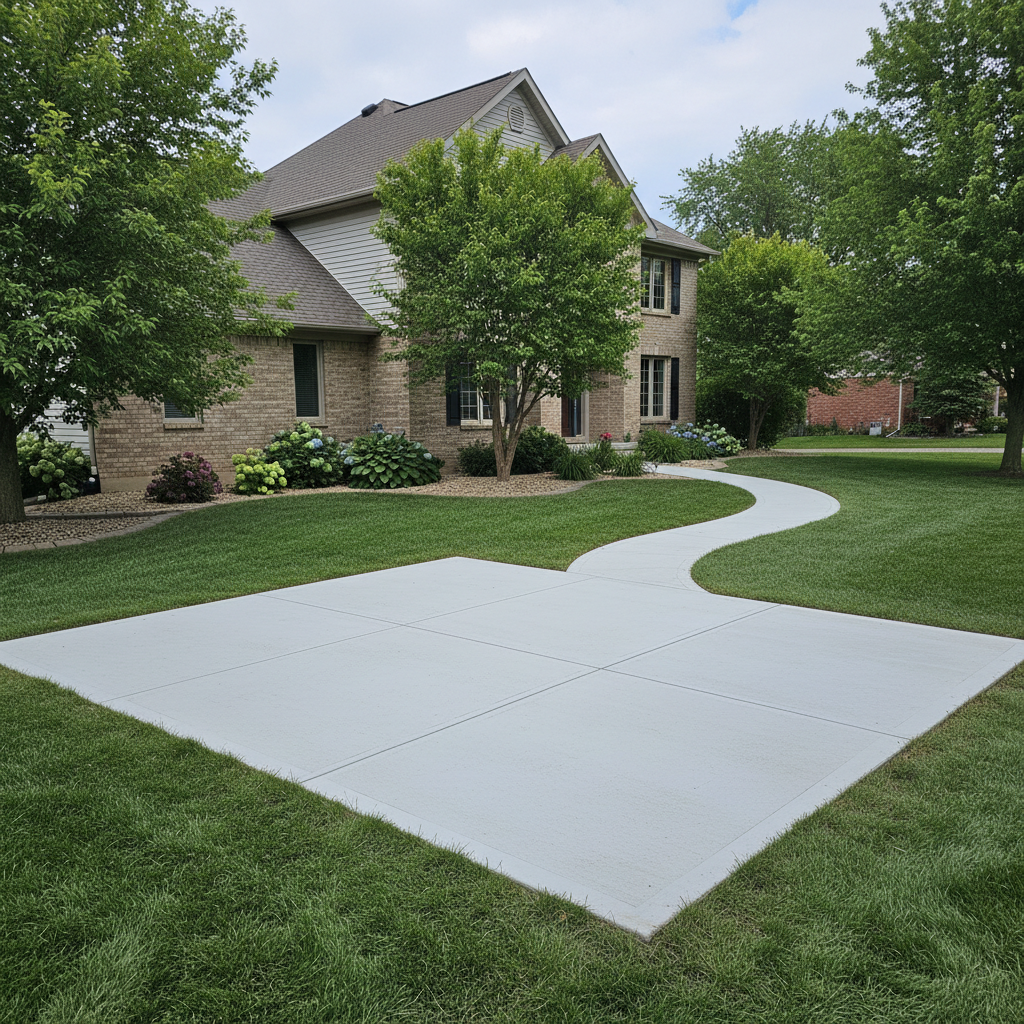
So, you're thinking about upgrading your driveway, maybe putting in a new patio, or finally fixing that crumbling sidewalk? Excellent! Concrete, when it's done right, is a fantastic, super durable material. But after all these years, I've watched plenty of folks here in Naperville stumble into some pretty common traps. These mistakes usually end up costing them more money, more time, and honestly, a huge headache. Let's talk about what to keep an eye out for.
Mistake #1: Focusing Only on the Lowest Bid
Look, I totally get it. Everyone wants a good deal. But when you're gathering quotes for concrete work, the absolute cheapest price almost never works out to be the best deal in the long run. I've seen homeowners jump on a low bid, only to discover the contractor skimped on materials, didn't prep the sub-base correctly, or just plain vanished when problems popped up.
Think about it for a second: good concrete work needs quality materials, experienced labor, and the right equipment. If someone's price is way lower than everyone else's, they're probably cutting corners somewhere. You'll likely end up paying twice – once for the cheap job, and then again to have Coastal Concrete Solutions come fix it. Ask for detailed bids, compare what's actually included, and don't be shy about asking why one bid is higher or lower than another. A good contractor will always explain their pricing.
Mistake #2: Ignoring Proper Site Preparation
This is a huge one, especially here in Naperville with our clay-heavy soils. The concrete itself is only as strong as what's underneath it. I can't even count how many times I've seen driveways crack way too soon or patios settle unevenly because the ground wasn't properly dug out, compacted, and graded. You absolutely need a stable, well-drained base.
A proper sub-base means digging out the old stuff, often adding a layer of crushed gravel, and then compacting it really well. It also means making sure the ground slopes away from your house for good drainage. If a contractor talks about just pouring concrete straight over existing dirt or doing a quick scrape, that's a massive red flag. It’s kind of like trying to build a house on quicksand, you know? It just won't last.
Mistake #3: Not Understanding Reinforcement Needs
Concrete is super strong when you push on it (compression), but it's not so great at handling tension – meaning it can crack if it gets pulled apart. That's where reinforcement comes in. We're talking about rebar or wire mesh. It won't stop cracks completely, but it holds the concrete together if it does crack, keeping those cracks tight and less noticeable.
Some folks just assume all concrete jobs come with reinforcement, but not every contractor includes it as standard, especially on smaller projects or if they're trying to keep the price down. Always ask what kind of reinforcement they'll use and where. For a driveway or a patio that gets a lot of use, you absolutely want rebar or at least a good quality wire mesh. It's a small extra cost, but it makes a huge difference in how long your concrete lasts and how strong it is.
Mistake #4: Skipping Expansion and Control Joints
Concrete expands and shrinks with temperature changes. That's just what it does. If you don't give it specific places to move, it'll make its own places – usually in the form of ugly, uncontrolled cracks. That's why expansion joints (those full-depth separations often filled with a flexible material) and control joints (saw cuts or grooves that create weakened planes) are so important.
I've seen homeowners kick themselves for not insisting on proper joint placement. They end up with a beautiful new patio that develops a jagged crack right through the middle because there wasn't a control joint where it should have been. A good contractor will map out these joints strategically. If someone tells you they can pour a huge slab without any joints, run the other way. They're setting you up for failure.
Mistake #5: Neglecting Curing
Curing is the process where concrete gets strong. It's not just about letting it dry; it's about controlling the moisture and temperature so the concrete hydrates correctly. This usually means keeping it wet or covered for several days after the pour. If concrete dries out too quickly, it won't reach its full strength and will be much more likely to crack and have surface problems.
Some contractors will just pour and leave, expecting the homeowner to figure out the curing. Or worse, they'll tell you it's fine to drive on it in a couple of days. That's a recipe for weak, damaged concrete. Always ask about the curing process. We often use curing compounds or advise on keeping it damp. It's a really critical step that often gets overlooked, especially by less experienced crews.
Your concrete project is an investment in your home. Don't let these common mistakes turn it into something you regret. Do your homework, ask the right questions, and pick a contractor who really cares about quality and using the right techniques. You'll honestly be so glad you did.