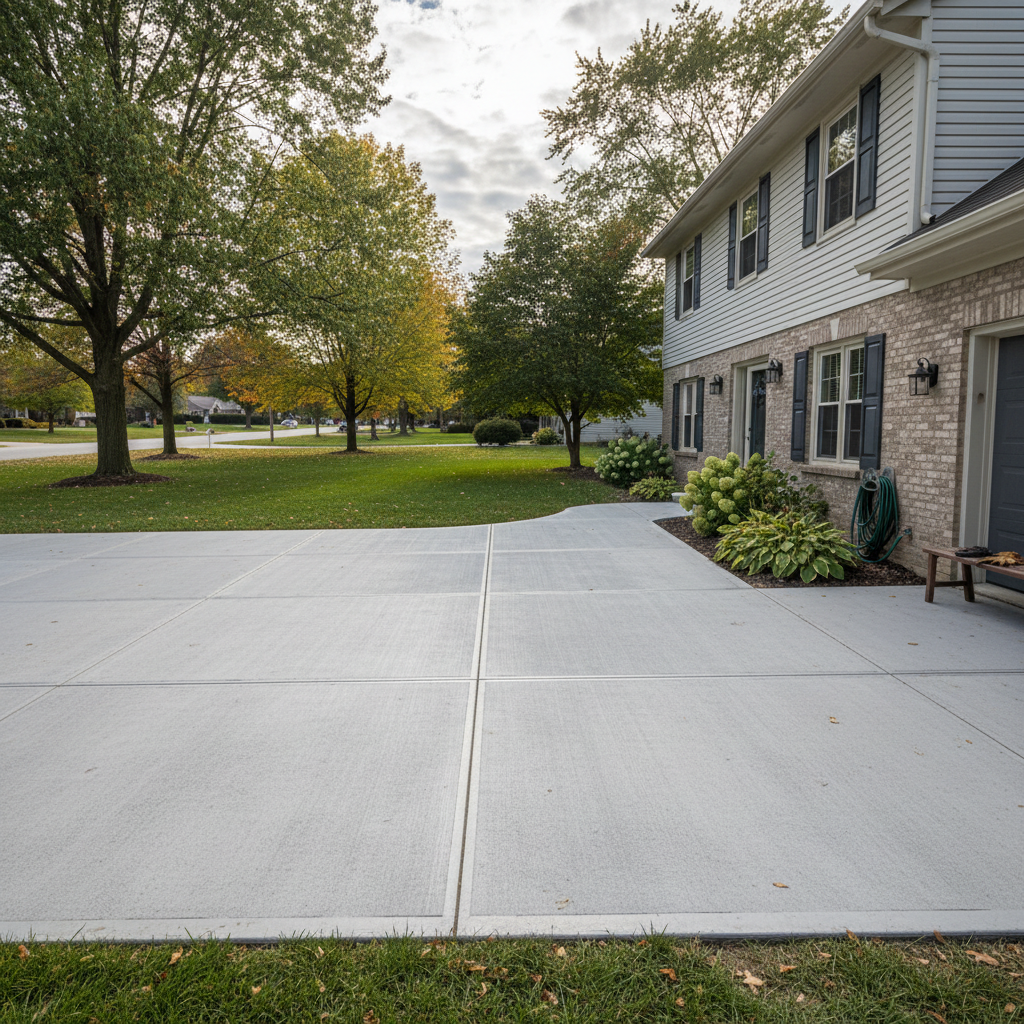
You've got concrete flatwork around your Naperville home — maybe a driveway, a patio, or some walkways. It's a big investment, no doubt, and you want it to last. But let's be real, Illinois weather isn't exactly kind to concrete. Freezing winters, blazing hot summers, and that constant freeze-thaw cycle can really do a number on it. So, how do you make sure your concrete stays strong and looks good for years? Good question.
Extend the Life of Your Concrete
It all starts with a good seal. When we pour concrete, it's porous. That means water can get right in. And when that water freezes, it expands, creating pressure that can crack and spall your concrete. Sealing is your best defense against this kind of damage. I recommend sealing new concrete within the first year, then every 2-3 years after that. It's not a one-and-done deal, you know? Think of it like waxing your car; it needs regular attention.
Drainage is another big one. Water pooling on your concrete is a recipe for disaster. Make sure your downspouts are pointing away from your flatwork. If you've got low spots where water collects, that's a problem you really need to address. Even a small puddle can cause significant damage over time, especially in areas like south Naperville where some older homes might have settling issues that lead to poor drainage.
Be careful with de-icing salts, too. While they melt ice, many types – especially those with ammonium sulfate or ammonium nitrate – can severely damage concrete. Look for de-icers that are concrete-safe; they're often labeled as such. Sand or kitty litter can give you traction without the chemical damage if you're really worried about it.
What Regular Maintenance Looks Like
Regular maintenance isn't complicated, but it is important. First off, keep it clean. Sweep off leaves, dirt, and other debris regularly. Organic matter can hold moisture against the concrete, and over time, that can lead to staining or even moss and algae growth, which gets slippery and degrades the surface.
If you get oil or grease stains, clean them up quickly. The longer they sit, the harder they are to remove, and the more likely they are to permanently stain your concrete. A stiff brush and a good concrete cleaner designed for oil stains usually do the trick. Just don't use harsh acids unless you really know what you're doing, as they can etch the surface.
Check your expansion joints. These are those pre-cut lines or strips between concrete slabs. They're there to let the concrete expand and contract without cracking. Make sure they're clear of debris. If the sealant in them is cracking or missing, it's a good idea to re-caulk them with a flexible, durable sealant. This stops water from getting underneath the slab and causing problems with the sub-base.
Warning Signs of Problems
You don't need to be a concrete expert to spot trouble. Just keep an eye out for these things:
- Cracks: Small hairline cracks are often normal, especially in bigger slabs. But if you see cracks widening, getting longer, or if one side of the crack is higher than the other, that's a sign of a bigger issue.
- Spalling or flaking: This happens when the surface of the concrete starts to chip or peel away. It's usually caused by water getting into the concrete and then freezing, or by improper finishing during installation.
- Pitting: Small, crater-like holes on the surface. Again, often a result of freeze-thaw cycles or poor quality concrete.
- Sinking or settling: If a slab or a section of your concrete is noticeably lower than the surrounding areas, it could mean issues with the sub-base, like erosion or poor compaction.
- Discoloration or efflorescence: While not always structural, significant or widespread discoloration can sometimes point to moisture problems. Efflorescence is that white powdery substance; it's usually harmless but can indicate water moving through the concrete.
When to Call a Professional
Look, you can handle a lot of the basic maintenance yourself. But there are times when you need to bring in someone who knows what they're doing. If you're seeing significant cracking, large areas of spalling, or noticeable sinking, it's time to call Coastal Concrete Solutions. Trying to fix major structural issues yourself can often lead to bigger headaches and more costly repairs down the line.
We can assess the situation, figure out the root cause, and recommend the best solution, whether that's concrete lifting (mudjacking or polyjacking), crack repair, or in some cases, a full replacement. Don't wait until a small problem becomes a major hazard or an eyesore that detracts from your home's value. Catching these issues early can save you a lot of money and stress.